
he J.League Cup rarely rewards the obvious favourite. Since the competition's rebranding in 1992, only a handful of clubs have managed to defend the trophy。and the list of winners is peppered with sides that finished mid-table in the league. What makes this tournament so unpredictable isn't luck—it's the structural demands it places on squad rotation and tactical adaptability. When fixtures pile up in July and August, coaches face a simple but brutal choice: field a full-strength side and risk burnout, or trust the reserves and accept a dip in cohesion. The teams that navigate this best tend to be those with a clear playing identity that filters through every level of the squad.Take Kawasaki Frontale's 2019 triumph. They didn't steamroll opponents;
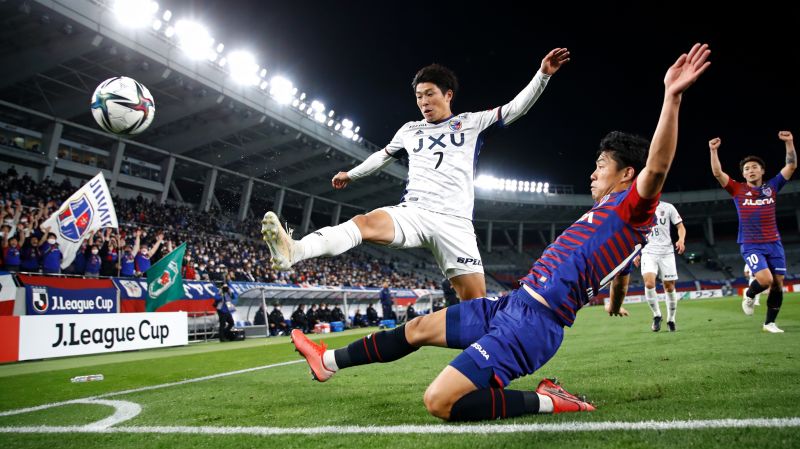
they ground out results with a rotated lineup that featured teenagers and fringe players alongside veterans. In the quarter-final against Nagoya Grampus, Frontale trailed 1-0 at halftime before a double substitution changed the game's tempo. The winning goal came from a 20-year-old academy graduate who had made just three league appearances that season. That kind of depth isn't accidental—it's the product of a club culture that treats the J.League Cup as a genuine development platform, not a distraction. You see similar patterns with Kashima Antlers and Yokohama F. Marinos, both of whom have used the competition to blood players who later became regulars.Tactically, the J.League Cup often exposes teams that rely on a single system. Because matches come thick and fast, opponents have less time to prepare specifically for you, but they also have more footage to analyse your rotational players. Coaches who can switch between a back three and a back four mid-tournament tend to thrive. Urawa Reds' 2016 win was built on this flexibility—they started the group stage with a 4-2-3-1。then shifted to a 3-4-2-1 for the knockout rounds after injuries forced their hand. The shift wasn't seamless, but it worked because the players had been drilled in both shapes during pre-season. That's a detail you don't appreciate until you watch a team fumble a formation change in a tight semi-final.Another factor: the away goals rule (abolished in 2021 but still relevant for historical context) and the single-leg final at a neutral venue. The neutral final。usually held at Saitama Stadium or Tokyo's National Stadium, strips away home advantage and amplifies the importance of set pieces. Statistically, nearly 30% of J.League Cup final goals since 2010 have come from dead-ball situations. Crowd noise plays a role too—neutral fans tend to be quieter, so communication between defenders is easier, which paradoxically makes well-drilled set-piece routines more effective. I've watched finals where the winning goal came from a short corner that the defending team had clearly not rehearsed for.For bettors and analysts, the J.League Cup is a trap if you apply league form blindly. A team sitting third in J1 might field a second-string XI in the group stage and lose to a J2 side, then suddenly look unbeatable in the knockouts. The competition rewards adaptability, youth development。and set-piece discipline over raw star power. That's not a flaw—it's the point. When the final whistle blows in November, the winner is rarely the most talented squad on paper. It's the one that treated the J.League Cup as a puzzle worth solving, not an inconvenience to endure.